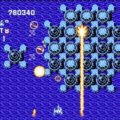
Developer: A.I Co, Ltd. Publisher: Kyugo Release: 1991 Genre: Action
In the early years of the Sega Genesis I would play anything. The excitement around new technology for most is enough to try every new game initially just to see something new. But a game has to be especially bad for me to give up on it before the end. Crossfire is one such game. On paper it is everything I was in to at the time. I like top down action games like Mercs and shooters, that goes without saying as a child of the 80s. A title that combines both should be amazing. Instead Crossfire is a repetitive mess that wears out its welcome.
In Japan Crossfire is Super Airwolf, a tie-in to the TV show of the same name. Apparently the show was very popular over there, which I find baffling as I found it uninteresting. But I was only five when that show was airing. In the US Acclaim had the exclusive rights to create games based on the TV series in the US and UK which is why the license is missing. It would not have made any difference if it were still present, Crossfire is a mediocre game by any name.
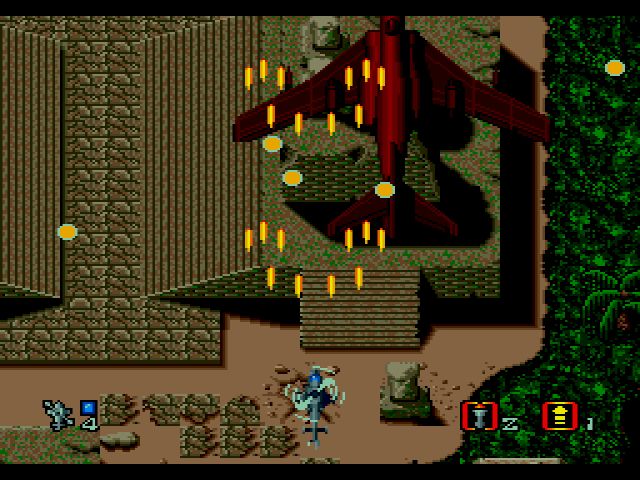
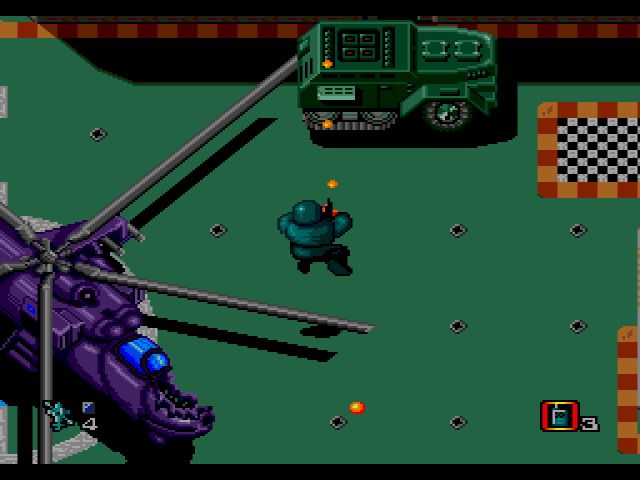
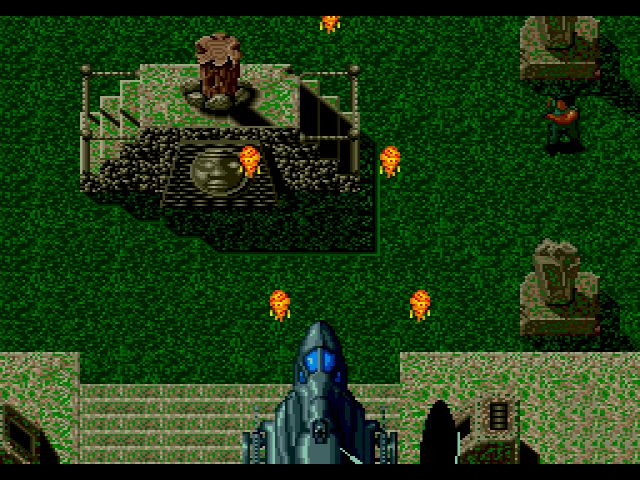
Crossfire is a combination top down action game and shooter. As a mercenary your mission is to rescue hostages all around the world for a price. Each mission has three parts. You approach the enemy base in your supped up helicopter for some shmup action. Once there you invade on foot to find the hostage and exit. Finally you take to the sky once again to spirit them away to safety. The money you earn from each job can be used to buy new weapons in one of three categories, extra lives, and protection for both parts of the game. The selection is not large but at least varied. You do not have access to the full arsenal at all times; instead you choose one from each category before the missions start.
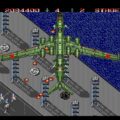
In its shooter stages Crossfire resembles many of Toaplan’s military titles like Twin Cobra and Fire Shark. The initial missions are slow and less interesting as you will not have enough cash to buy new weapons. The default cannon is weak and makes the pace feel slower than it is in reality. Once you buy the laser or wave it picks up. I would describe this part of the game as rudimentary. It hits all of the typical shooter beats with measured enemy waves and the occasional larger, more powerful ship. But it never rises above that due to its heavy repetition, a problem that plagues the whole game.
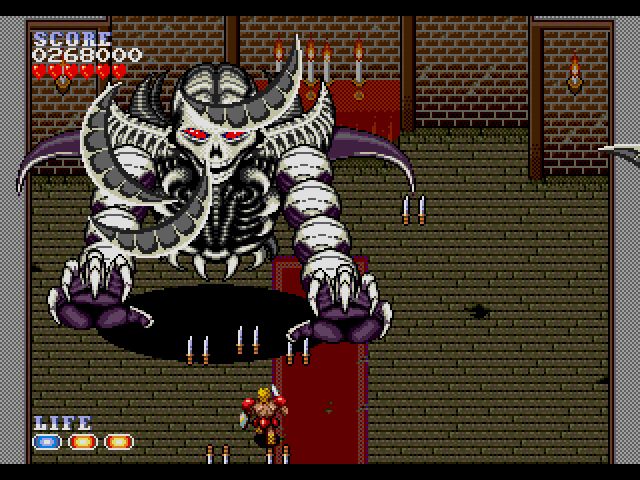
Once out of the chopper you explore the enemy base a la Ikari Warriors. This should have been the easiest part of the game to nail. But it suffers due to stiff controls. Movement is rigid and your space to move is limited. The level design attempts to be elaborate but ends up annoying due to your limited moveset. There are no power-ups here; you use whatever weapon you equip prior. But even more than that it grows tiring as you face the same three enemies among drab, grainy environments. The only saving grace is that these levels are mercifully short despite their high difficulty.
As I have mentioned repeatedly what ultimately dooms Crossfire is its repetition. The world map gives you the impression that you are taking missions all around the world. But for the most part they all look almost exactly the same. Each shooting segment takes place over the same sea, with identical planes and ships. The end level boss may change but for all of the game’s six missions you can expect to see similar assets shuffled around. On foot is barely any better. There are only two soldier types, turrets, and a mobile tank. I get that licensed games are made on the cheap but this is ridiculous. The only reason I even bothered to complete the game was in the interest of being thorough. I wasted my time.
In Closing
Crossfire is a long forgotten title in the Genesis library for a reason. Aside from being rare it is thoroughly average in every category from graphics to gameplay. The game would have been better served focusing on one genre than mixing up two as neither will hold your interest for long. Play any of the Thunder Force games or the previously mentioned Mercs to satisfy your action fix.