Developer: Namco Publisher: Namco Release: 10/02/01 Genre: Action
Namco came out the gate swinging with Time Crisis, revolutionizing the light gun genre with its mechanics and cinematic action. The PlayStation home port was a step above with additional content to be one of the best rail shooters of that era. After setting such a high bar the question became whether they could exceed it with the inevitable sequel. The answer is oh god yes. Time Crisis II is a phenomenal game that excels in every category. This remains one of my favorite light gun games in years and I cannot recommend it enough.
NeoDyne Industries reveals the StarLine Network, a series of 64 connected satellites that will help connect the world’s communication networks. However V.S.S.E agent Christy discovers that it is a front for CEO Ernesto Diaz to launch an experimental nuclear satellite in space to sell to the highest bidder. She escapes with crucial data but is captured by NeoDyne mercenaries moments before agents Keith and Robert come to collect her. The chase is on, both to stop NeoDyne and to rescue Christy.
Time Crisis II was released in arcades in 1998 and surprisingly was not ported to the original PlayStation. Instead it would hit the PlayStation 2 in 2001 with a number of upgrades, chief among them a graphical update. The arcade board used for the coin op was significantly weaker than the PS2. Namco has given the game a massive facelift with additional cutscenes to boot. But that is just the tip of the iceberg in terms of features and content in this excellent port. And just think; as insane as this game is they will exceed their work in the follow-up.
Unlike the port of Silent Scope Namco wisely support a variety of peripherals for Time Crisis II. The Guncon II is usually packaged with the game but the original for the PS One also works as well. The Guncon II however has extra buttons and a D-pad which makes certain actions more natural and convenient. A traditional Dual analog controller also works as well and the game is surprisingly playable using it. Obviously it is not ideal but I had little trouble making my way through the game using memorization and skill. If you are playing on PC than it is one of many reasons to invest in a Sinden light gun. They advertise the gun on their website with this game for a reason.
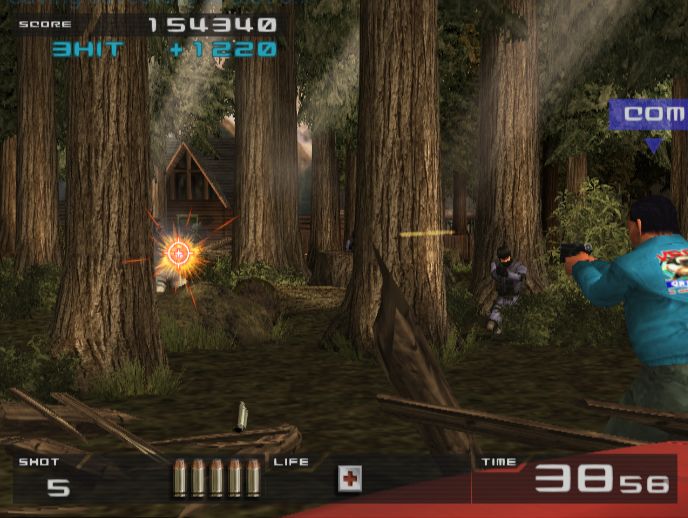
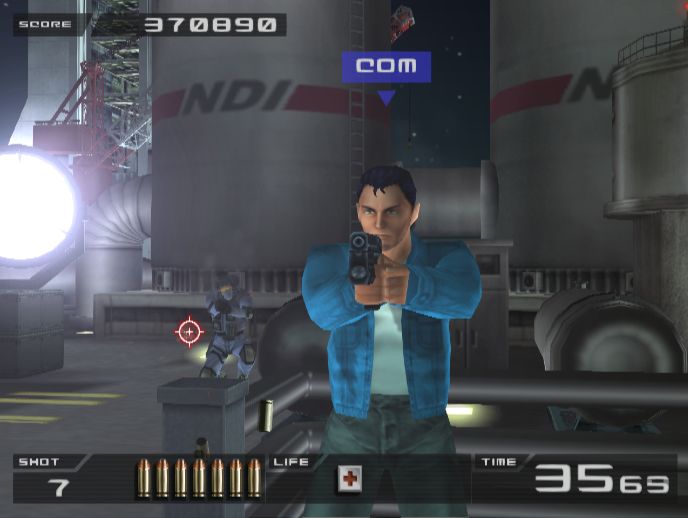
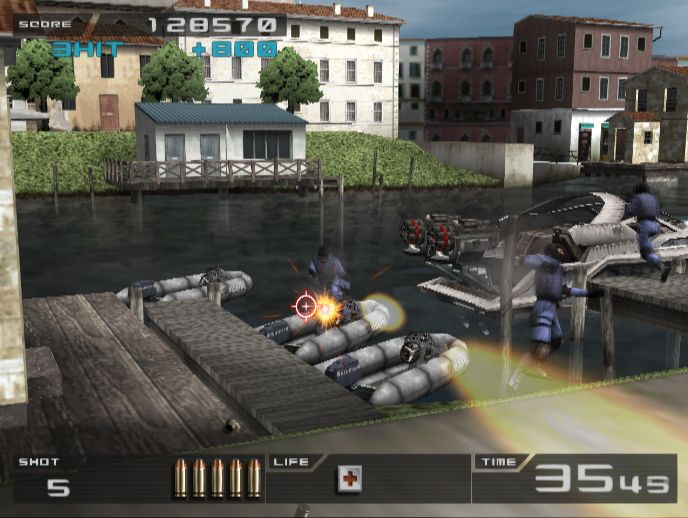
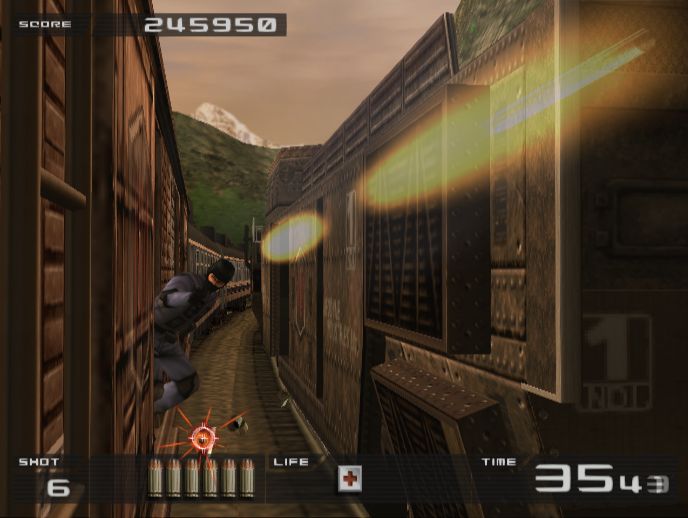
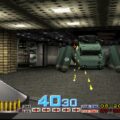
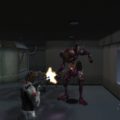
The general gameplay of Time Crisis remains the same in this sequel. Each level consists of three areas in which you move from cover to cover, taking out bad guys and using it as a shield to avoid damage. The difference this time is a focus on coop, either with a friend or the AI. Your partner fights alongside you, taking out enemies on their own and often being an obstacle himself. There are several creative situations that involve working around your buddy. Most notably during the jet ski sequence in area three of the first stage and my favorite, near the finale when is facing you and covering your back. I like the buddy system; it adds a dynamic that livens the gameplay. My one regret is that I was never able to play this game in coop as it was never in in my area.
I love the way the Time Crisis II handles player lives. Even though you will see all manner of gun fire and grenades thrown around the only ones that can damage you are critical bullets and environmental obstacles. These are almost always telegraphed in advance by a red critical flash giving you time to react. Granted some enemies like bosses may fire three or fire critical bullets in a row. But at least when you see the red crisis flash you know it is coming. This is a huge change for the better. In the majority of light gun games it always feels random which attacks are damaging. The Crisis Flash/Critical bullet system along with the cover system gives players more control over their fate.
The main strength of Time Crisis II aside from its mechanics is its pacing. Each area is not only a creative scenario in itself but never dawdles in one place too long. The game absolutely nails the feeling of being a secret agent on a roller coaster ride. The plot is just interesting and goofy enough to be compelling while providing cool set pieces as well. Eagle eyed players will spot interactive background elements for extra points as well as opening up alternate routes. They also ease up on the difficulty a bit most notably in regards to time. Each scene shift always grants the maximum of forty seconds rather than the rationing of the original. This makes the game more accessible although it still puts up a fight. It also makes it more palatable to replay multiple times, both to explore different routes and for the unlockable content.
Namco has always been good about packing their arcade ports with extra content and Time Crisis II is no exception. There are three extra modes aside from story: Agent Trainer is basically target practice. Quick & Crash is a port of the mechanical arcade game and is a diversion not worth your time. Shoot Away II is a skeet shooting minigame and another obscure arcade port. The real meat is Crisis Mission where you will likely spend your time after exhausting all the story mode paths. This extensive mode takes place over the course of six days with five missions each plus an extra. Each mission has a specific task and awards medals based on performance. These range from the simple to the hard and extremely cool. While not as cool as the Special Story mode of the original they extend the life of the game substantially.
In Closing
Time Crisis II is an fantastic conversion and an excellent rail shooter overall. It takes its brilliant core mechanic and layers teamwork, spectacle, and precision without bloating the experience. Few arcade shooters feel this pure, focused, or replayable with its mountains of content. Namco continue their streak of excellence with this series and we as gamers reap the reward. This remains one of the best rail shooters of all time to this day.