Developer: Factor 5 Publisher: Nintendo Release: 12/07/98 Genre: Action
Nintendo enjoyed a long, fruitful partnership with Lucas Arts when it came to Star Wars. Going back as far as the NES the games were best sellers and gave us a taste of the Star Wars magic. But the leap to the Nintendo 64 and 3d would see the property enter the stratosphere. Shadows of the Empire gave us a glimpse of what was possible but Star Wars: Rogue Squadron was the true star of that generation. Taking the vehicle segments of that game and blowing them out in to a full game full of variety and fan service was a brilliant idea and gamers reap the rewards. This remains a great game even today.
Rogue Squadron features an original plot that takes place between Star Wars and the Empire Strikes Back. After the Battle of Yavin the Empire marshals its forces for an all-out assault on the Rebel Alliance in retaliation. To fight back Luke Skywalker forms the Rogue Squadron to execute tactical missions against the Empire to weaken their forces and give the Alliance a fighting chance. But in the background a new threat among the imperials begins consolidating power to become the next Emperor….
It would be easy to assume Rogue Squadron is a console version of the popular X-Wing series on PC. But rather than a simulation this is an arcade style action game like Star Fox 64. Each mission has multiple objectives with some evolving over time. Generally these fall in to for categories: search and destroy, escorting, rescue, and reconnaissance. At sixteen mission there is a lot of variety as you are taken on a whirlwind tour of the galaxy. The most famous planet like Hoth and Bespin are present of course. But the majority are new worlds either created specifically for this game or only referenced in the novels. Seeing them fully realized in 3d is a treat for Star Wars fans among other things.
Rogue Squadron offers a variety of ships for throughout its campaign. Generally there is a default for most missions. However some allow you to choose freely. Others unlock after completing a mission so you can replay them to chase medals. Each ship has strengths and weaknesses and it is interesting to play around those attributes. The X-Wing is generally the most balanced and you can rarely go wrong with this in most stages. The Y-Wing is strictly for attacking ground targets and is the most heavily shielded. The A-Wing is the fastest and a good choice for chasing down Tie Fighters in dog fighting missions. The Snow Speeder is exactly the same as it is in Shadows of the Empire. The V-Wing I had never heard of before. This one has the strongest weapons and is perfect for the game’s rough final missions.
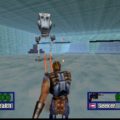
The mission objectives start simple such as the initial run to destroy probe droids and keep casualties to a minimum. But by Chapter II they become more complex and ask a lot of players. In Escape from Fest you must locate AT-PTs, free them, and escort them to a landing zone. All this while AT-STs and rotary turrets try to destroy you and your envoy. Even after that there is still one more objective. The Blockade on Chandrila seems simple enough; you need to protect the supply train heading in to the city. But the enemies are aggressive and chances are you will lose most of the train before it reaches its destination. I actually found defending the city afterward to be even harder. Even though missions fall in to four categories they still leave room for variety as they change in real time.
This is not an easy game by any stretch. Most missions will take a few attempts but not always for the right reasons. The size and scope of the game often works against. It is nice that Tatooine is a sprawling environment that has all of the requisite land marks. But it is also frustrating trying to find your mission objectives, especially when some have a time component involved. This is something that pops up again and again. The escort missions are the most annoying in this regard as I sometimes failed before realizing where to go next. It never reaches a boiling point however. There is a method to the game’s madness that makes it fun to go back and try to earn medals and beat your previous performance. But it is notable and worth mentioning.
Perhaps what truly makes Rogue Squadron great is its atmosphere. As you fly over Jabba’s palace and watch your squad mates actively shooting down Tie Fighters the game does an excellent job immersing in the Star Wars universe. The radio chatter sells the illusion as well. Prior Star Wars have given us glimpses of this in bits and pieces. But nothing on this level outside of the X-Wing games on PC. The story could easily have been a season of a TV show which is a compliment. It is cool that you get to interact with the most popular landmarks of the series. But the new planets do a good job being just as iconic. That they were able to do all of this on a cartridge is nothing short of astounding. You get all this and they even manage to squeeze some cool bonus content as well.
Even after the lengthy campaign replay value remains high without multiplayer. Each mission gives bronze, silver, and gold awards based on criteria such as accuracy, completion time, and bonuses collected. Your rank increases with medals and unlocks a ton of hidden content. There are three bonus levels that are reenactments of events from the films which I will not spoil. A number of extra vehicles are also playable such as the Millennium Falcon, a Tie Interceptor, and a Buick Electra, a joke from one of the developers. There is one more that remains one of the best kept secrets in video game history. A Naboo star fighter is unlockable with a code which was released six after the game’s release. Considering Rogue Squadron released six months before the Phantom Menace and the prevalence of cheat devices that they were able to keep this under wraps is nothing short of amazing.
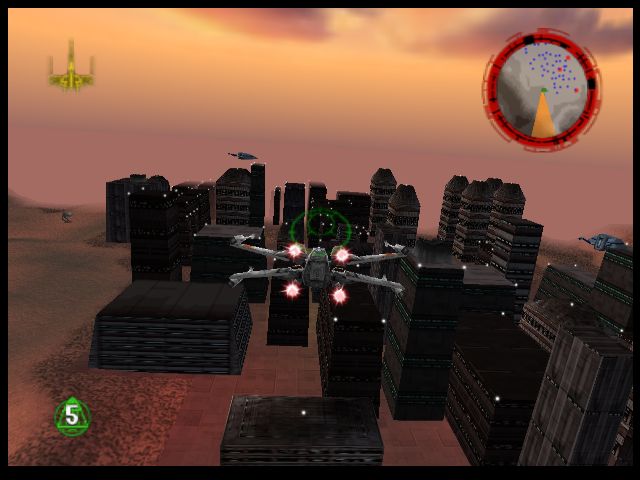
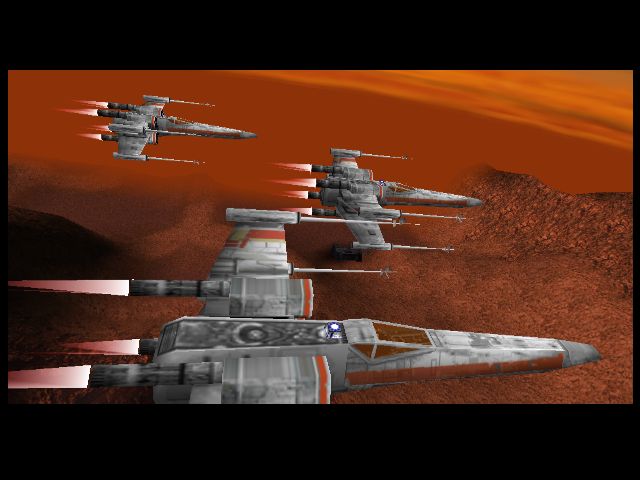
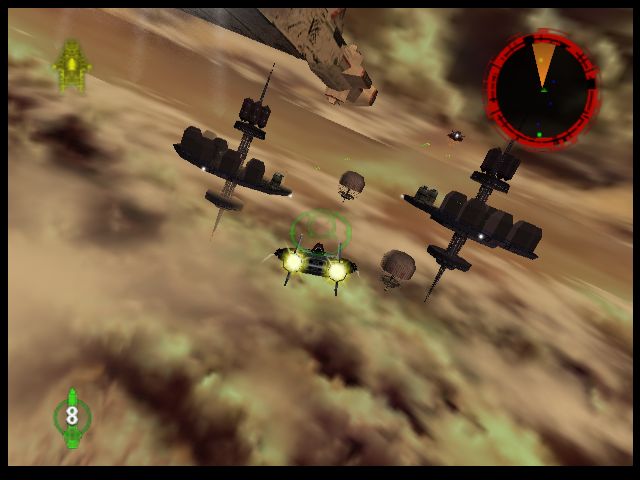
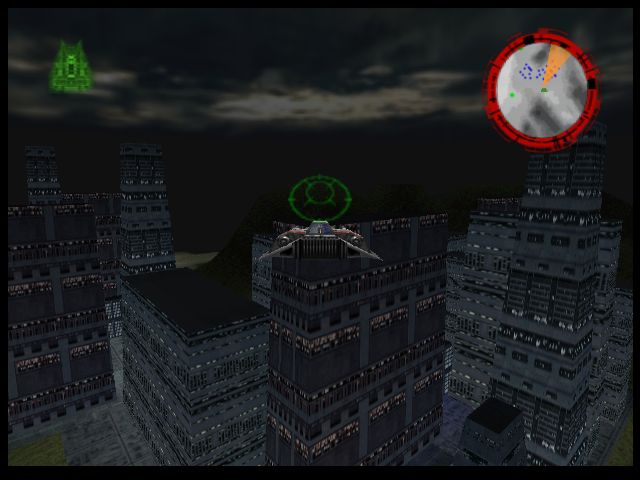
Factor 5 were key in convincing Nintendo to release the RAM expansion without the 64DD. That decision allows Rogue Squadron to be among the platform’s best looking games in terms of resolution and performance. The texture work is far above most titles on the platform and shines in high resolution. The 3d models are exquisite; I spent a lot of time in the hangar gawking at the various ships. Some of the planets are picturesque. From the nighttime city on Corellia to the cloudy skies of Taloraan, the game never ceases to amaze. The real time lighting effects look spectacular too. The trademark N64 fog is still present but a small price to pay for this visual splendor. The game does begin to chug in the larger environments if you are playing in high resolution. But compared to most games with this mode the game remains playable.
The music and sound effects almost reach the same level as the graphics. Surround sound enables you to determine enemy position by direction and the sound effects sound ripped directly from the films. The score is near symphonic despite being on a cartridge and is pretty extensive. Speaking of extensive, thanks to their compression techniques Factor 5 squeezed in nearly an hour of sampled speech. Character bios, mission objectives, and radio chatter is all voiced, which is surprising and cool.
In Closing
Star Wars: Rogue Squadron is an amazing game, with a lengthy campaign, a ton of secrets and some of the highest production values on the system. Factor 5 and Lucas Arts went above and beyond to craft one of the best Star Wars games of all time in my opinion which is high praise. With multiplayer this would have been over the top. But as is it has to settle for just plain amazing.